
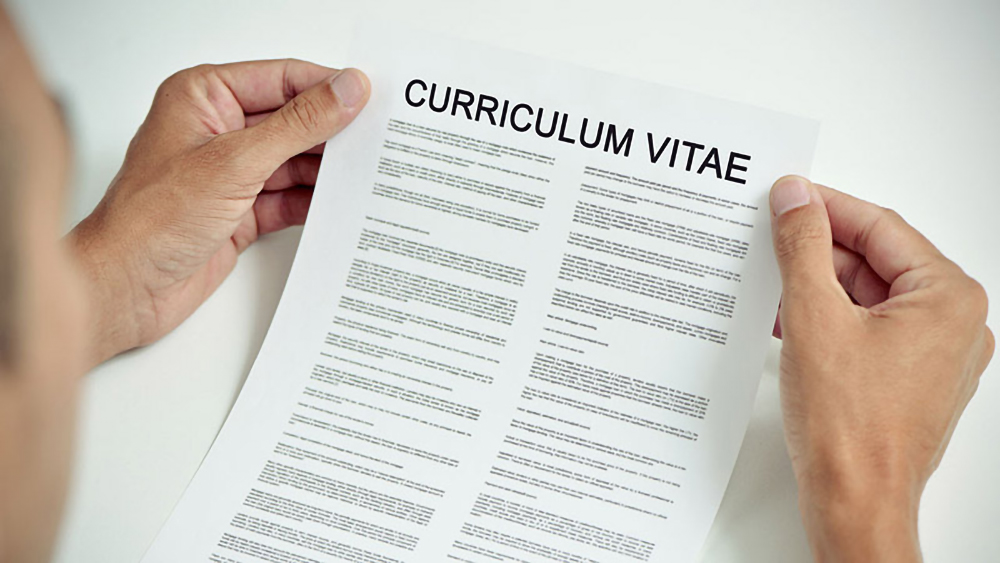
The CV (Curriculum Vitae) is a document that shows your path and achievements as an artist. Along with your portfolio and your artist statement, it is one of the most important tools for introducing yourself and your artistic practice to others.
A strong artist CV is constantly requested when applying for fellowships, residencies, public art commissions, or when contacting gallerists or curators. It is essential to have a clean, well-structured professional artist CV ready to be sent out.
In this guide, you will learn how to structure your artist resume, what to include, and how long it should be.
Why Does an Artist CV Matter?
- Open call applications: Most opportunities require an artist CV or art resume to apply.
- Informing curators, galleries, and collectors: Your CV provides a quick overview of your artistic background and accomplishments.
- Press releases: An artist resume is often used for press releases and other promotional materials that communicate information about the artist.
Step 1. Content and Structure of Your Artist CV
For optimal readability, structure your artist CV with clear sections:
- Personal information
In this section, you should state your full name, year and place of birth, and your current living and working location. To make your artist resume look professional, indicate the country acronym for the cities you mention. Example:
Mary Smith
Born in 1995 in London, UK
Lives and works in Berlin, DE
- Education
List in your artist CV your degrees, diplomas, and postgraduate programs. Include relevant details such as location, time frame, and professors. If you have a non-traditional art background, highlight relevant experiences that have shaped your practice. Example:
Education
2024-2026 MA in Fine Arts, in the class of Prof. Blue, Städelschule, Frankfurt, DE
2021-2024 BA in Fine Arts, Royal College of Art, London, UK
- Exhibitions
Solo exhibitions and group exhibitions can be presented together or separately. It is better to opt for the former if you do not have many solo shows yet. Otherwise, it is best to separate the two in your artist CV.
Make the listing of your exhibitions very clear by providing the following information: year, exhibition title (in italics), name of the exhibition venue, location and country acronym. Example:
Exhibitions
2026 John Smith - Bad animation, Southbank Centre, London, UK (solo)
2025 Celebration, Site Gallery, London, UK
2025 The parallel worlds, Kunstverein Frankfurt, Frankfurt, DE
2024 True Story, Portikus, Frankfurt, DE
2024 I´m sorry, Hall Projects, Berlin, DE (solo)
2023 You and I, Casper Leen Foundation, London, UK
If your art practice also consists of performances or film screenings, you might want to insert an additional section after „Exhibitions“ in your artist resume to list the places where they were shown.
- Publications
In this section, you want to list in your artist CV the publications, catalogues or artist’s books that feature your artwork. Example:
Publications
2026 John Smith, Exhibition catalogue, edited by Mary Le, SBP Editions, London, UK
2025 Sorry, Artist´s book, Selime Editions, Frankfurt, DE
2025 Whatever, Artist´s book
2024 You and I, Exhibition catalogue, Casper Lee Foundation, London, UK
- Residencies, Fellowships, and Grants
Listing residencies, grants, and awards helps demonstrate professional recognition in your artist CV. Example:
Residencies & Grants
2026 Artist in Residence, Fogo Island Arts, CA
2025 Artnex Award
2024 Project grant, Casper Foundation
- Collections
If your work is part of a public or private art collection, it is important to mention this in your art resume. Example:
Collections
Collection Rick, London, UK
Collection Schering Stiftung, Berlin, DE
- Contacts
Always include your contact details so that people interested in your work can easily reach you through your artist CV. Example:
Contact
Email: contact@firstname-lastname.com
Website: www.firstname-lastname.com
In addition to the standard sections listed above, you can also provide references of articles that mentioned your work, project spaces you organized, lectures or talks you gave, workshops you participated in, and art fairs you have been part of.
Step 2. Length of Your Artist CV
Some open calls specify a page limit. If no guidelines are given, try to keep your artist CV between one and two pages. Remember most readers are going to skim over your artist resume and not read it entirely. For this reason, it is very important that you keep your CV short, structured, and straight to the point.
Step 3. Proofread Your Artist CV
Make sure there are no spelling and grammatical mistakes in your artist CV. You can use one of the many online proofreading tools, but always review the final version yourself.
Step 4. Layout for Readability
Choose a layout and fonts that will not distract the reader from your artist CV. Rather than fancy fonts, select classic ones like Helvetica or Arial in a size between 11 and 12 points.
By following these steps, you can create a compelling professional artist CV that effectively showcases your artistic journey and achievements.
Do you need more help? Check out our online video course: How to make an art portfolio. This course is organized as a step-by-step guide that will give you a comprehensive understanding of all the different components needed to build an excellent portfolio and an artist CV. Enroll now and bring your artist resume and portfolio to the next level!